

On this page
Overview
MetaTrader 4 launched in 2005 and is still the most widely supported retail forex platform on earth, mostly because of the enormous library of expert advisors and indicators built for it over two decades. MetaTrader 5 arrived in 2010 as a genuine rebuild rather than an update, with a different programming language and a broader asset scope. Neither one has replaced the other, and the right choice depends on what you trade and which brokers or prop firms support it.
Asset classes and market access

MT4 was built for forex and CFDs and has stayed there. MT5 supports forex, stocks, futures, and options in addition to CFDs, with a proper Depth of Market window showing real order book data on supported instruments. If you only trade currency pairs, this difference will not affect you much. If you want to trade futures or equities from the same terminal, MT5 is the only one of the two that supports it natively.
Programming language and strategy testing
MT4 uses MQL4, while MT5 runs on MQL5, a fully object-oriented language closer to C++. MQL5 code generally runs faster and handles complex expert advisors more cleanly, but it is not backward compatible, so MT4 EAs need to be rewritten, not just recompiled, to run on MT5. The strategy tester also differs meaningfully: MT5's tester is multithreaded and can run genuine multi-currency backtests, while MT4's is single-threaded and tests one symbol at a time.
This matters more than it might seem for anyone developing their own systems. A portfolio-style strategy that trades several pairs at once and needs to see how they interact can only be properly backtested in MT5. Running the same idea in MT4 means testing each pair in isolation and manually reasoning about how they'd behave together, which is a much weaker approximation.
Order types and hedging
MT5 offers more pending order types, including stop-limit orders that MT4 lacks natively. Hedging is where the two diverge most for prop traders: MT4 supports hedging (holding a long and short position on the same symbol simultaneously) by default, while MT5 defaults to a netting system that automatically combines opposing positions unless the broker specifically enables hedging mode. If your strategy relies on hedging, confirm your broker has that setting turned on before assuming MT5 will behave like MT4.
Timeframes and charting
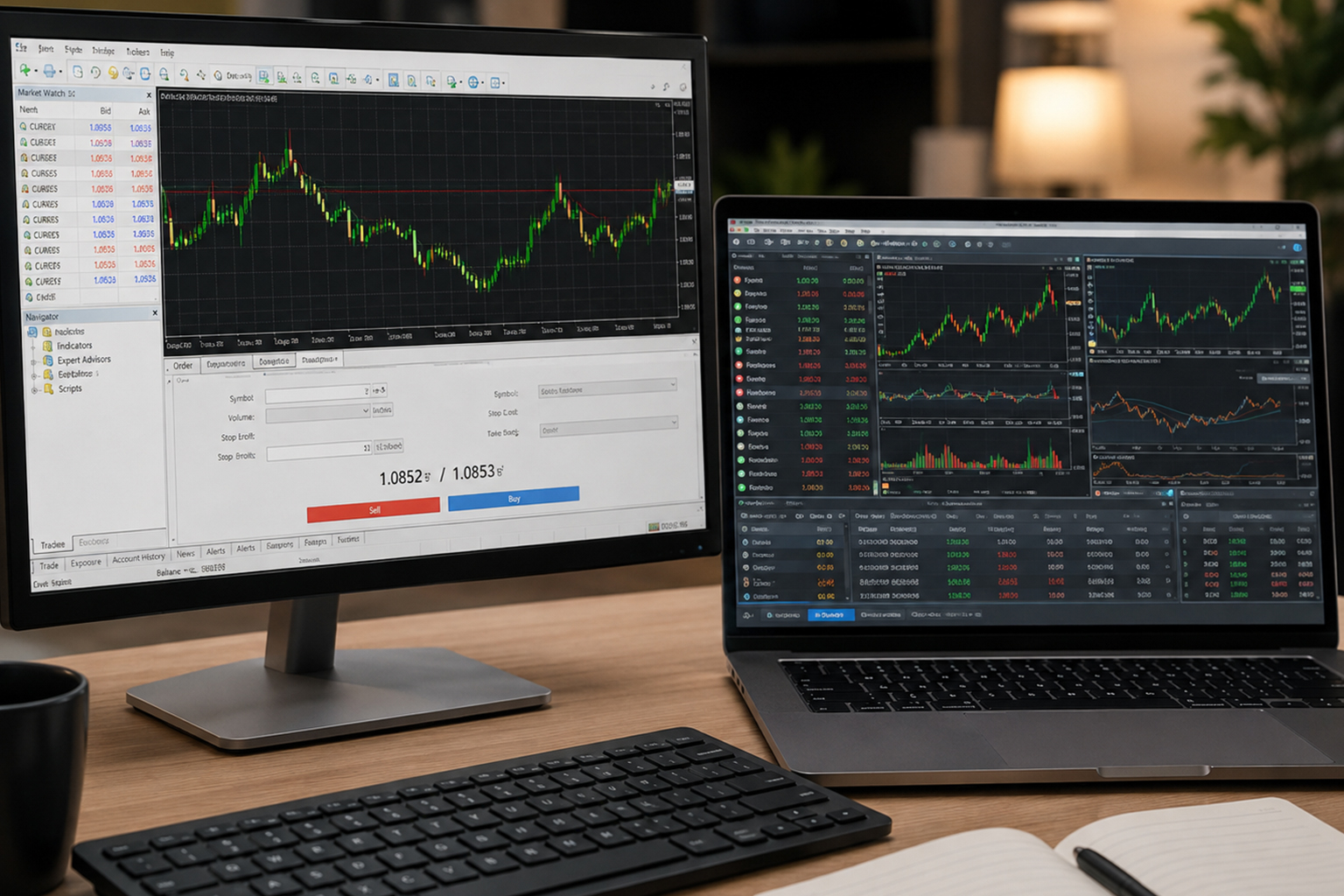
MT4 offers nine timeframes. MT5 offers twenty-one, including finer intraday options like 2-minute and 10-minute charts that MT4 simply does not have. For discretionary traders who work off a handful of standard timeframes, this rarely matters, but scalpers and algo developers building on unusual intervals will notice the gap quickly.
Broker and prop firm support in 2026
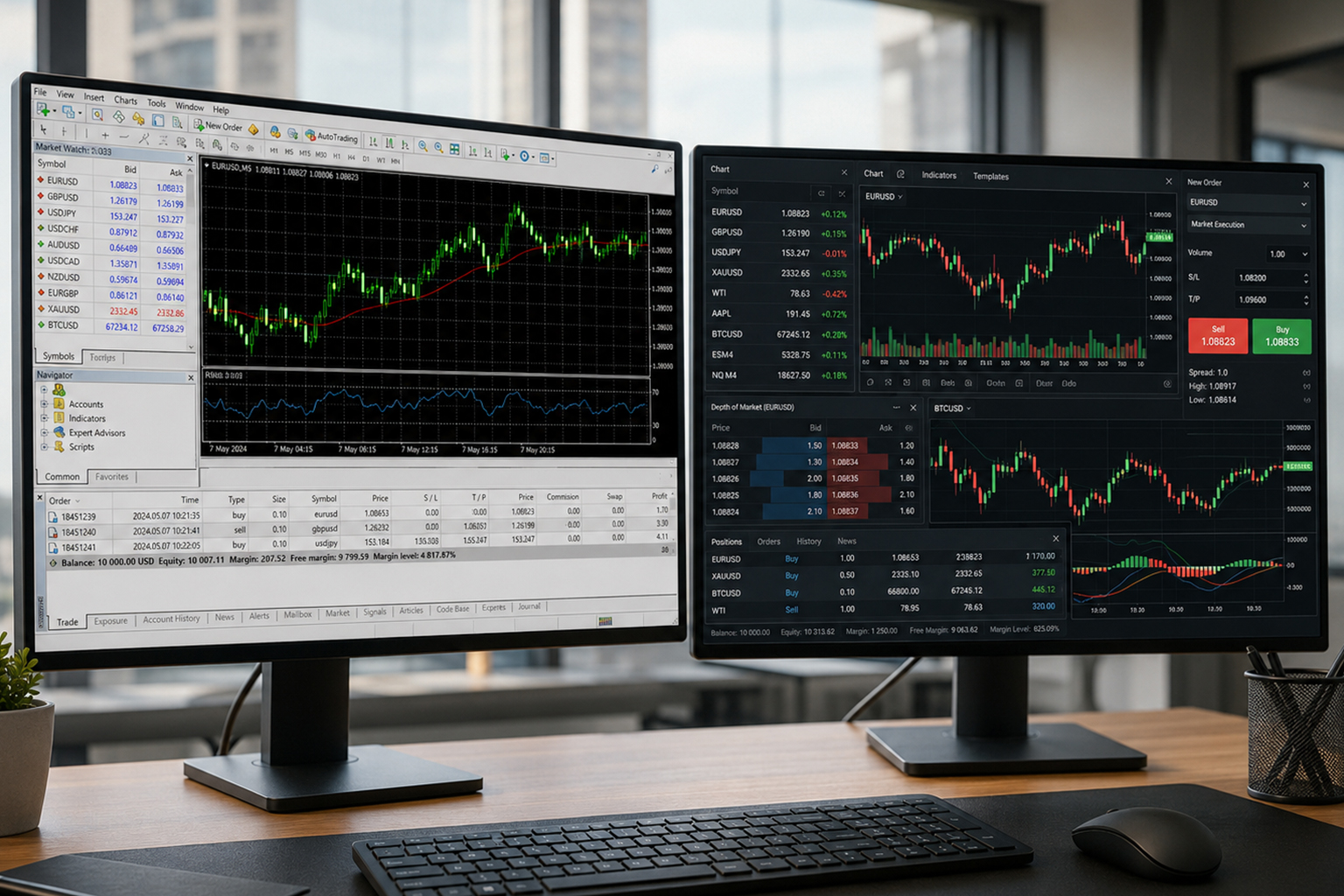
MT4 is technically a legacy platform; MetaQuotes stopped issuing new MT4 licenses to brokers years ago, but the installed base is so large that most retail forex brokers still run it alongside MT5 for existing clients and EA compatibility.
Prop firms have moved faster toward MT5 and newer browser-based platforms like TradeLocker, particularly firms focused on futures rather than forex, since MT4 never supported futures contracts at all. If you're picking a platform from scratch with no legacy EAs to carry over, most new prop firm accounts in 2026 default to MT5.
Which one should you use?
If your broker or prop firm only supports one, that decides it for you. Outside of that constraint, MT4 still makes sense for forex-only traders who rely on an existing library of MT4-specific EAs and indicators, or whose strategy depends on native hedging.
MT5 is the better fit for anyone trading multiple asset classes, running compute-heavy backtests, or starting fresh with no legacy EA code to carry over. Both platforms run identically well on a Windows VPS positioned close to your broker's trade server, and PropVPS supports either one out of the box.
One VPS, Either Platform
PropVPS runs a pre-configured Windows Server 2022 environment that supports MT4, MT5, NinjaTrader, and cTrader side by side, so switching platforms or running both never means switching infrastructure. Deploy in under 5 minutes and get sub-1ms execution to CME, NYSE, and LSE regardless of which MetaTrader version you trade on.
Compare PropVPS plans: https://propvps.com/pricing