
On this page
Overview
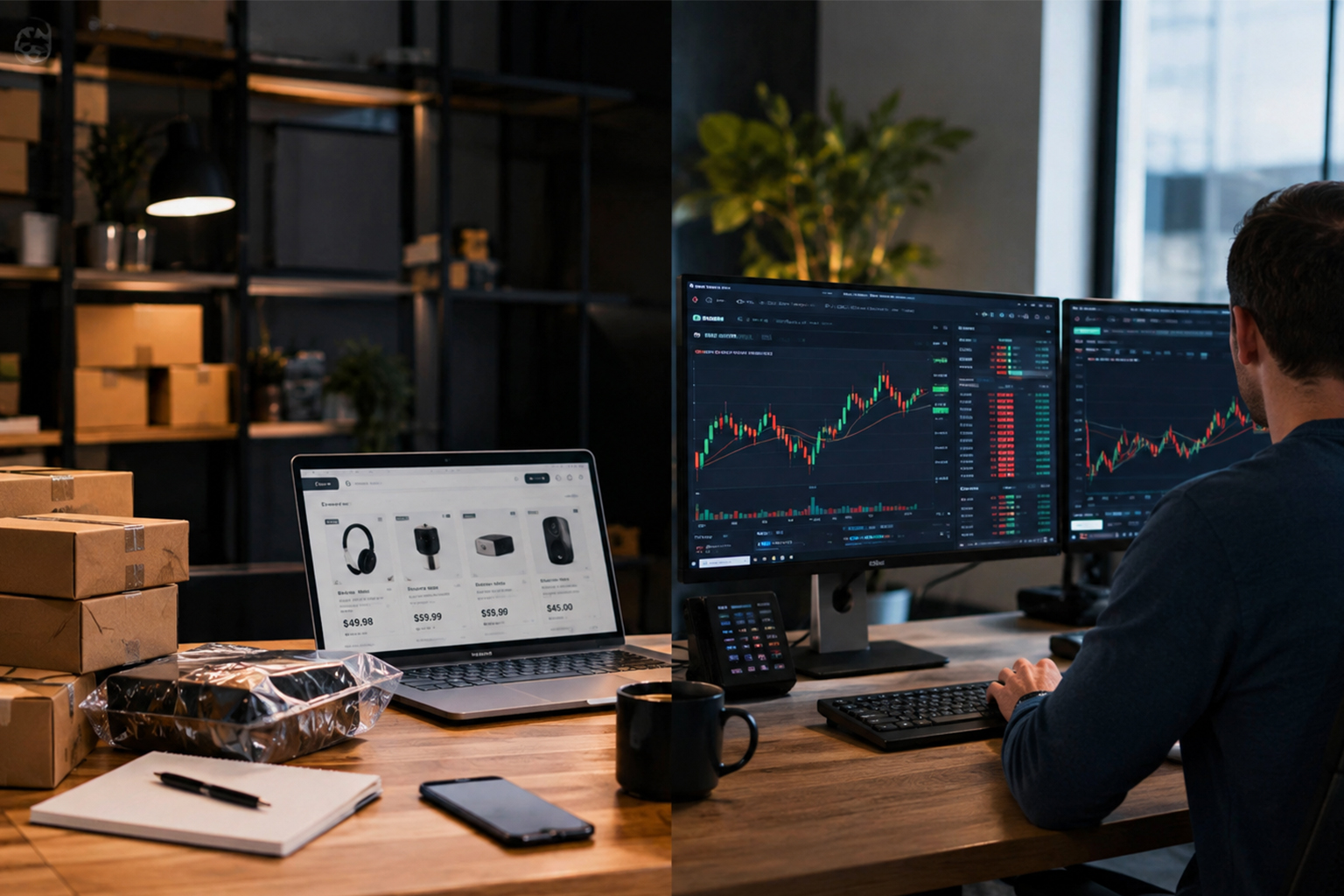
Digital arbitrage covers two related but different practices, and which one someone means usually depends on whether they came from e-commerce or from trading. In e-commerce, it means buying a digital good or a physical product listed cheaply on one online marketplace and reselling it on another at a markup.
In trading, it means exploiting a delay between two price feeds for the same asset so an order fills at a stale price before the market catches up. Both rely on speed and a gap that closes fast, so it is worth separating them clearly.
Digital arbitrage in e-commerce

The retail version is straightforward. A reseller scans marketplaces like eBay, Amazon, or domain auction sites for items priced below what they consistently sell for elsewhere, buys in bulk or one at a time, and relists at the higher going rate.
Digital products such as software licenses, stock photos, or e-books fit the same pattern since there is no shipping delay to worry about. The margin comes from information gaps: sellers who do not know an item's true market value, or platforms with different regional pricing.
This side of the practice is usually run with browser extensions and spreadsheet tracking rather than custom code. Tools that scan sold listings across multiple marketplaces and flag underpriced items are widely available, and the skill involved is more about product knowledge and negotiation than software. The margins per item tend to be small, which is why serious e-commerce arbitrageurs operate at volume rather than chasing single big wins.
Digital arbitrage in trading: latency arbitrage

The trading version is more technical and considerably more controversial. Retail brokers often quote prices from an aggregated feed that lags a fraction of a second behind the fastest institutional feeds.
A trader running low-latency infrastructure can, in theory, see a price move on the fast feed and fire an order to the slower broker before that broker's quote updates, locking in a near risk-free profit on the gap. This is generally called latency arbitrage, and it is a well-documented reason brokers monitor execution speed and trade patterns closely.
In practice, the window for this kind of gap is measured in single-digit milliseconds, and it closes the instant a broker's own systems catch up.
That means the infrastructure required (colocated servers, direct market feeds, custom software watching two price streams at once) costs more to build and maintain than most retail traders ever recoup, especially once a broker's risk team flags the pattern and starts intervening manually.
Why brokers push back on it
Almost every retail broker's terms of service explicitly ban latency arbitrage, sometimes under the heading of "toxic flow" or "abusive trading." Brokers that run a dealing desk lose money directly when a trader consistently picks off stale quotes, since the broker is the counterparty on the other side of the trade.
Detection systems flag accounts with unusually high win rates on very short holding periods, and the typical consequence is a closed account and voided profits rather than a warning. This is different from legitimate statistical arbitrage, which trades genuine price relationships between correlated instruments over time rather than a quoting delay.
The practical reality
The e-commerce side of digital arbitrage is a legitimate, if labor-intensive, way to generate income and carries no regulatory risk beyond ordinary marketplace policies. The trading side sits in a different category entirely. Even where it is not explicitly illegal, it violates the contract you sign with almost every broker, and the infrastructure needed to run it reliably is expensive to maintain against a broker that is actively trying to shut it down.
Traders looking for an edge through speed are generally better served running legitimate automated strategies on infrastructure built for consistent, low-latency execution rather than trying to exploit a quoting gap a broker will eventually close.
If your strategy depends on being first to a price, infrastructure matters more than the strategy description. PropVPS places your trading platform inside Equinix financial hubs with dedicated cores and sub-1ms paths to major venues — built for legitimate automated trading, not for exploiting a broker's delayed feed.